How to Choose Pet-Safe Flowers Overseas
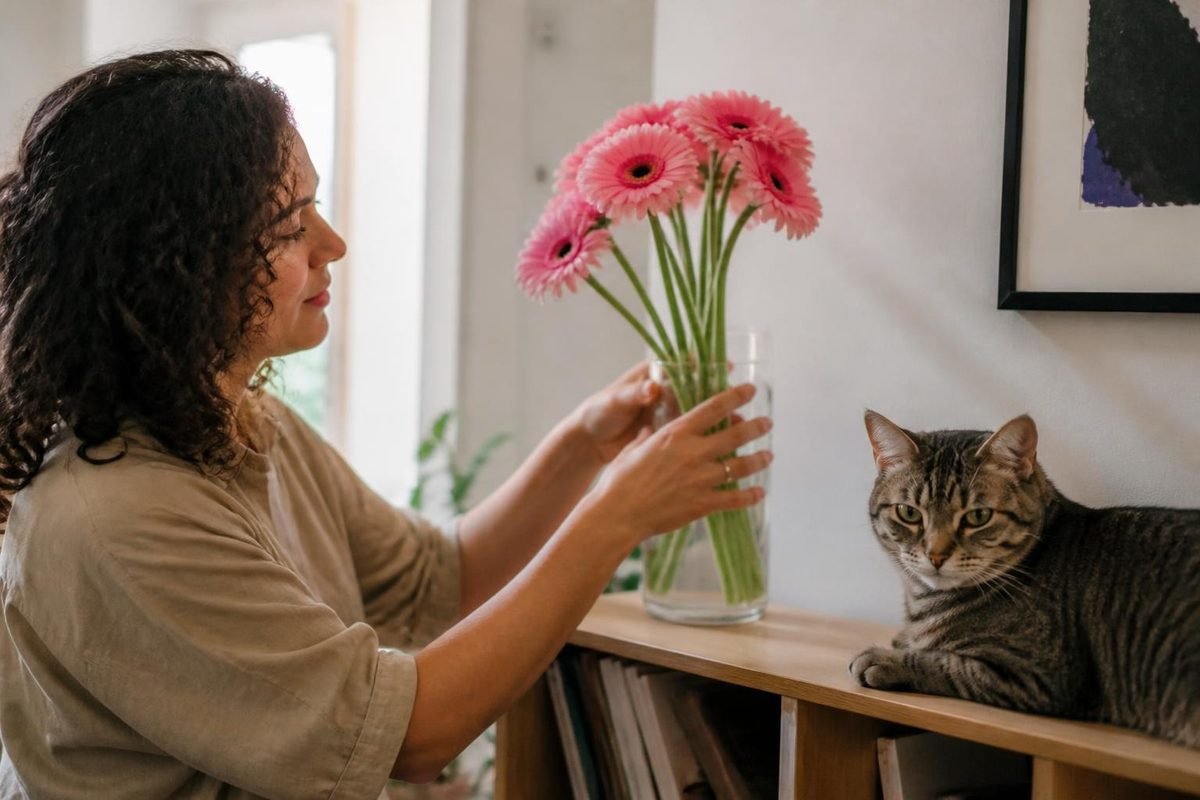
Choose flowers for an overseas household by checking every plant in the arrangement against a reliable pet safety resource and confirming what animals live there. Give the local florist exact plant names and ask for a simple arrangement without unverified greenery or fillers.
Start with the household
Ask the recipient what pets live in the home, including any that visit regularly. Cats and dogs do not always react to plants in the same way, so a general label such as pet friendly is not enough. If the gift is a surprise, a member of the household may be able to help.
Think about where the flowers might sit. A high shelf may be easy for a cat to reach, while a low table puts a vase within reach of many dogs. Even flowers considered nontoxic can cause an upset stomach if a pet eats enough of them.
Check each flower by name
Use a reliable source such as the ASPCA plant database to check the flowers for the relevant animal. Look for the scientific name as well as the common name. Common names can refer to different plants, and a familiar name on its own may not identify the flower in a bouquet.
Some flowers listed as nontoxic to cats and dogs include:
- Roses, from the genus Rosa
- Gerbera daisies, Gerbera jamesonii
- Moth orchids, from the genus Phalaenopsis
Check the exact plant offered by the florist rather than assuming every flower with a similar name is safe. Avoid true lilies and daylilies in a home with cats. Pollen, petals, leaves and even vase water can pose a serious risk.
Give the florist clear instructions
Ordering from a florist near the recipient can make it easier to find flowers that are available locally. Explain which pets are in the household, then specify the flowers you have checked. Ask the florist to confirm the full list of flowers and greenery before making the arrangement.
Do not overlook filler flowers, foliage or decorative plant material. Each needs its own check. If the florist cannot confirm an ingredient, ask for it to be left out. A small bunch of one verified flower can be a better choice than a mixed arrangement with uncertain contents.
Ask the florist to avoid chemical sprays and flower food in the arrangement. Keep any packaging and care products away from pets, too.
Plan for safe delivery and display
Confirm the address and delivery instructions with someone in the household. Local flower availability varies, so agree on a substitute in advance. Ask the florist not to replace your chosen flowers with unchecked plants if the original choice is unavailable.
Include a short note with the flower names so the recipient knows what is in the vase. Suggest placing it out of reach, changing the water regularly and removing fallen petals. If a pet eats an unknown plant or shows signs of illness, the household should contact a veterinarian promptly.
A little checking before you order helps the flowers arrive as a thoughtful gift, with fewer surprises for the people and animals sharing the home.
Related reading: more info
Corrections
Spot something wrong? Send it to the desk and it gets fixed in the open.